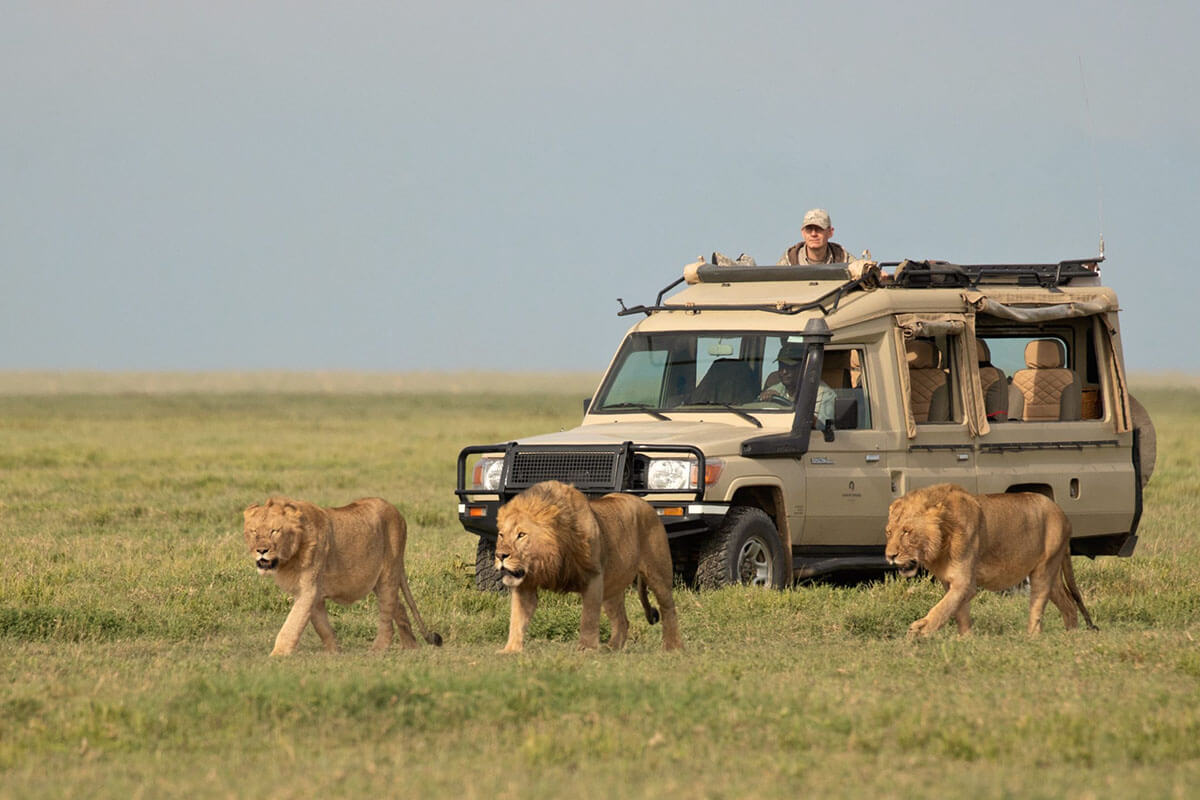
Tanzania offers rewarding wildlife viewing throughout the year, but the season shapes the landscape, crowd levels and the kinds of sightings you may encounter. Start with the experience you want, then build your route around it.
The dry season: June to October
With less rain, grass is often shorter and animals may gather near dependable water sources. These months are popular for classic game drives. The Great Migration moves through different parts of the Serengeti, though its location changes with rainfall and grazing.
This is a busy travel period. Reserve park stays and camps early if your dates are fixed, and expect cooler mornings and evenings in the highlands.
The green season: November to May
Rain brings greener scenery, seasonal flowers and excellent birding. Some areas are quieter, and the short-grass plains of the southern Serengeti are associated with the migration’s calving season, usually around January to March.
Showers can affect road conditions and plans, so allow a little flexibility. The season is not one continuous stretch of heavy rain: patterns vary by month and region.
Choose your timing by interest
- For migration viewing, match your dates to the herd’s likely location and keep plans flexible.
- For birdwatching and vivid landscapes, consider the greener months.
- For a quieter itinerary, ask about shoulder-season dates and which parks suit your route.
- For a safari-and-beach trip, plan the coast separately: it has a different climate from the northern parks.
Plan around the whole journey
Weather and wildlife do not follow exact calendar dates. A local planner can help balance park time, driving distances, accommodation availability and the sightings that matter most to you.